How to Calculate Anion Gap with K
What Is the Anion Gap?
The anion gap is a computed value obtained from routine electrolytes measured on a blood chemistry panel. It serves to assess the difference between the positively charged measured cations and the negatively charged unmeasured anions in the blood. Because this number indicates overall acid-base balance, it is a valuable initial test for spotting a metabolic disturbance.
In everyday serum chemistry interpretation, the anion gap is used to help explain whether an electrolyte imbalance is due to occult acids, changes in protein levels, or another possible cause. A lab result with an abnormal anion gap does not alone give a diagnosis, but it can refine the differential and guide clinical decision making.
Most clinicians review the anion gap alongside sodium, chloride, and bicarbonate, and sometimes potassium, depending on the calculation formula used. The result is an assessment of anion concentration that can help reveal conditions such as metabolic acidosis.
Anion Gap Equation with Potassium
The classic anion gap formula is written as:
Anion gap = sodium - (chloride + bicarbonate)
When potassium is taken into account, the calculation changes to:
Anion gap = sodium + potassium - (chloride + bicarbonate)
This version adds an additional measured cation to the formula. Because potassium is one of the serum electrolytes reported on many panels, some clinicians and older texts use it in the formula. Others leave it out because potassium is fairly low in concentration compared with sodium and may have a smaller effect on routine interpretation.
The underlying principle stays the same: the calculator compares principal cations against major negative ions. Because the body contains many unmeasured anions, the anion gap acts as an indirect measure rather than a direct one. An Anion Gap Calculator performs this assessment quickly from the values in the patient sample.
How to Use an Anion Gap Calculator
An anion gap calculator is a useful tool for using the calculation formula correctly. To operate it, collect the relevant lab values from the electrolyte panel or broader blood chemistry panel. The most common inputs are sodium, potassium, chloride, and bicarbonate.
Here are the simple calculation steps:
- Identify the serum electrolytes from the lab result.
- Confirm whether the formula used by your source includes potassium.
- Include sodium and potassium if applicable.
- Add chloride and bicarbonate.
- Deduct the total of chloride plus bicarbonate from the total of sodium plus potassium.
For example, if sodium is 140, potassium is 4, chloride is 104, and bicarbonate is 24, then the potassium-inclusive formula is 140 + 4 - (104 + 24) = 16. A calculator performs the arithmetic instantly, but understanding the logic is essential for proper diagnostic interpretation.
Using the tool also reduces the risk of mistakes when reviewing multiple lab values in a busy clinical setting. It helps standardize interpretation guide workflows and supports quicker recognition of acid-base disorders.
Standard Anion Gap Range and Its Meaning
The normal range for anion gap depends on the formula used and the laboratory normal interval. When potassium is excluded, the reference interval is usually lower than when potassium is included. That difference matters because the calculation method changes the expected baseline.
A increased anion gap suggests that unmeasured acids are accumulating in the blood. This often points to acid-base imbalance caused by processes such as excess lactate, ketone excess, or renal failure. A low anion gap is less common but can occur with hypoalbuminemia, laboratory issues, or unusual electrolyte patterns.
The anion gap is best interpreted as a indicator, not a stand-alone diagnosis. A result that sits within the reference range does not exclude disease, and a result outside the reference range should always be viewed in context with the patient sample, symptoms, and other chemistry findings.
When Potassium Should Be Included
Potassium inclusion varies with the formula variation being used and the convention of the laboratory or clinician. In some forms of clinical practice, potassium is included because it is a measured cation and because older teaching emphasized a more complete electrochemical picture.
In other settings, potassium is omitted to simplify routine interpretation. Since potassium is usually present at a much lower level than sodium, excluding it often does not change the overall clinical impression. That said, using the same approach uniformly is essential when comparing results over time.
When reviewing an electrolyte panel, always verify which formula the report or calculator is using. If you switch between formula styles without noticing, the reference interval and the meaning of the result can appear inconsistent even when the underlying serum electrolytes have not changed.
Frequent Causes of a Changed Anion Gap
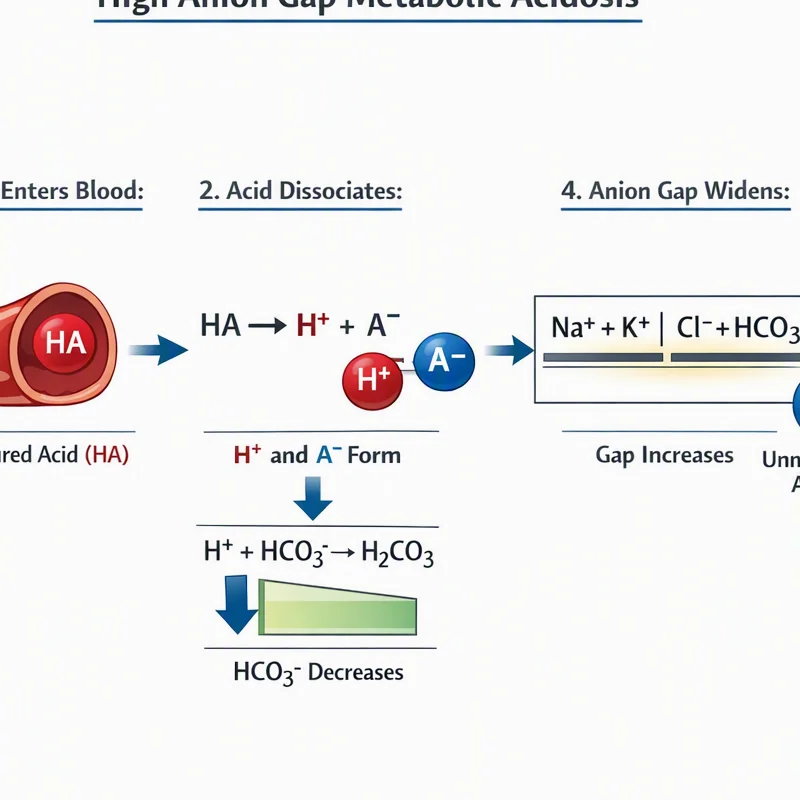
An altered anion gap often reflects a change in the relationship between measured cations and unmeasured anions. The most common reason for a high anion gap is metabolic acidosis, where acid buildup collects or buffers are depleted.
These causes include:
- Lactic acidosis, where lactate builds up due to reduced oxygen delivery to tissues or other metabolic stress
- Ketoacidosis, which may occur with diabetes, starvation, or alcohol-related metabolic disturbance
- Renal failure, where acid excretion declines and retained acids increase the gap
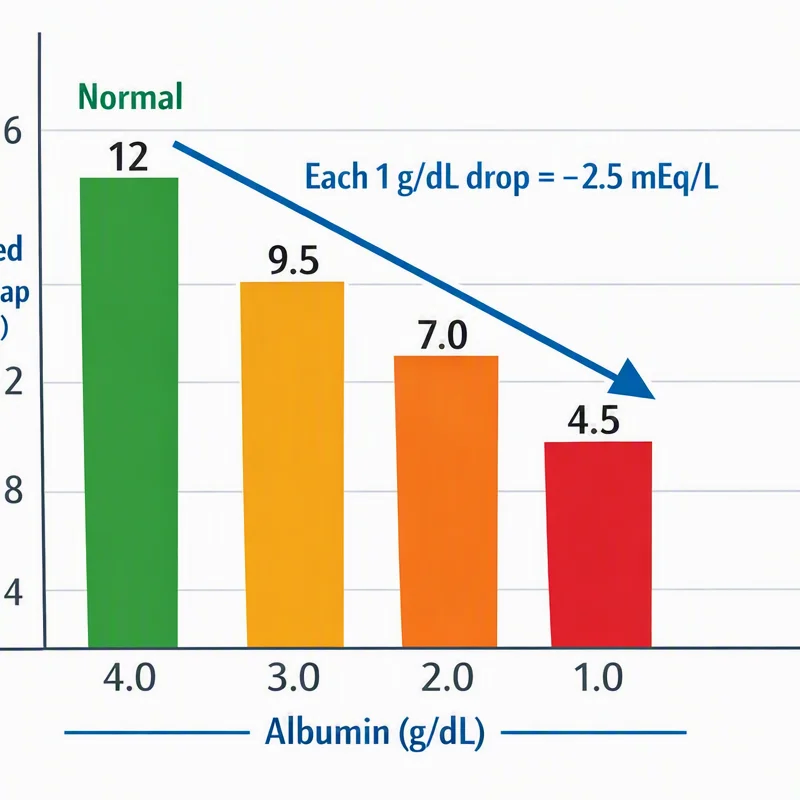
Albumin also matters because it is a major unmeasured anion. When albumin is low, the anion gap may be lower than expected even if an acid-base problem is present. This is why the lab result must be interpreted in context rather than in isolation.
In what way Albumin Alters the Result
Hypoalbuminemia can strongly alter the anion gap because albumin contributes to the pool of unmeasured anions. If albumin is reduced, the gap may look falsely normal or low even when there is a clinically important metabolic disturbance.
That is why many clinicians rely on albumin correction to estimate a corrected anion gap. The goal is to adjust for the missing negative charge contributed by protein, especially albumin. This corrected value provides a more accurate picture of acid-base balance and can support clinical interpretation.
In practice, a https://anion-gap-estimator585.inkharbory.com/posts/what-measurement-units-are-used-in-anion-gap-calculation corrected value is especially useful when evaluating patients with chronic illness, inflammation, or fluid shifts that lower albumin. Without correction, a high-gap process can be underestimated, which may slow the recognition of the underlying cause.
Example Walkthrough: Finding the Anion Gap with Potassium
This is a straightforward worked calculation with the potassium-including formula.
Use the given values from a serum chemistry panel:
- Serum sodium: 138 mEq/L
- Serum potassium: 4 mEq/L
- Chloride level: 102 mEq/L
- HCO3: 22 mEq/L
Apply the formula:
Anion gap = sodium + potassium - (chloride + bicarbonate)
Replace the values:
Anion gap = 138 + 4 - (102 + 22)
Anion gap = 142 - 124
Anion gap result = 18
If the lab’s reference range for the potassium-inclusive method is, as an example, 12 to 20, this result may be in the expected range. When the lab uses a different reference interval, the same number could be interpreted in a different manner. For that reason the formula and the reference range must always match.
In cases where albumin is low, the corrected anion gap may be elevated than the uncorrected value. If so, the corrected value may better reflect the true degree of metabolic disturbance.
Constraints and Clinical Interpretation
The anion gap is a useful clinical tool, but it has important restrictions. A single result cannot replace full medical interpretation, especially when the patient has complex illness, mixed disorders, or changing fluid status. The value should be reviewed with history, physical exam, and other lab data.
Laboratory error is another concern. Sample handling issues, incorrect specimen timing, or analyzer variation can affect the result. If the anion gap does not fit the overall picture, repeat testing or confirmatory evaluation may be needed.
Blood gas testing may also provide useful context, especially when assessing acid-base balance. A blood gas can help clarify whether there is acidosis, alkalosis, or a mixed pattern. Used together, the blood gas and chemistry results improve the accuracy of diagnostic interpretation.
Essentially, the anion gap should be considered as a initial marker that points toward an possible cause rather than as a standalone diagnosis. It supports clinical decision making, but it does not replace a full workup.
FAQ: Anion Gap and Potassium
How do you work out anion gap with potassium included?
Use the formula sodium + potassium - (chloride + bicarbonate). Add the serum electrolytes from the lab result into an Anion Gap Calculator or work out manually. The result estimates the gap between measured cations and unmeasured anions.
Why do some formulas include potassium and others do not?
Some formulas include potassium because it is a measured cation and part of the full electrolyte balance. Others omit it because the value is small compared with sodium and the simplified formula is easier for routine use. Both approaches can be valid if the same reference range and formula style are used consistently.
What is a normal anion gap when potassium is included?
The normal range depends on the lab’s reference range and the exact calculation formula. Potassium-inclusive values usually have a higher expected reference interval than potassium-excluded values. Always interpret the result using the same method that was used to calculate it.
Does low albumin change the anion gap result?
Indeed. Low albumin, or hypoalbuminemia, can reduce the measured anion gap because albumin is a major unmeasured anion. In that situation, albumin correction may reveal a more accurate corrected anion gap.
What does a high anion gap mean clinically?
A high anion gap often suggests a buildup of acids and is commonly associated with metabolic acidosis. Important causes include lactic acidosis, ketoacidosis, and renal failure. It is a clue that should be interpreted along with the rest of the clinical picture.